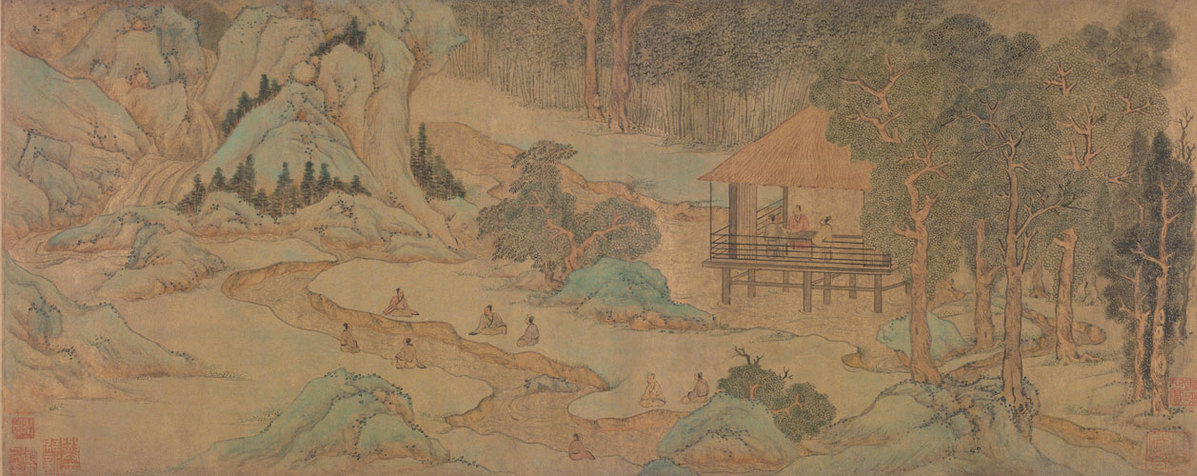
Wen Zhengming
文徵明
- 分类: 艺术瑰宝
- ID: 1861292442866479105
Home CategoryArtsWen ZhengmingPlay4.5 minsWen Zhengming (1470-1559), a renowned Ming Dynasty (1368-1644) painter, calligrapher, and poet from Suzhou, Jiangsu province, was a key figure in the Wumen (Wu) painting school. He is celebrated for classical landscapes and literati art, reflecting traditional Chinese culture's spirit and scholarly ideals over technical virtuosity.ShareRelated Videos**Learn the story behind Wen Zhengming in Suzhou 00:00:41Catalogue1. Early Life and Background2. Artistic Development and Career3. Contribution to Chinese Art and Literature4. Cultural and Historical Context5. Legacy and Influence6. Artistic Style and Techniques7. Personal Life and Philosophies
Early Life and Background
Wen Zhengming (1470-1559) was a distinguished painter, calligrapher, and poet during the Ming Dynasty (1368-1644), born in Suzhou, Jiangsu province. As a prominent figure of the Wumen painting school, Wen Zhengming became known for his classical landscapes and literati art, which embodied the spirit of traditional Chinese culture. The Wumen School, also referred to as the Wu School, was influential in shaping the literati painting style that emphasized scholarly ideals over technical virtuosity.
Artistic Development and Career
Wen Zhengming's career was marked by a profound dedication to art and literature. In his early years, he was recognized as a talented artist, but struggled to gain official recognition. After spending four years in Beijing pursuing a governmental career, Wen Zhengming decided to return to Suzhou, devoting his life to art rather than the political sphere. This decision was influenced by his preference for a life of scholarly pursuits and personal integrity, away from the political machinations of the court.
Contribution to Chinese Art and Literature
Wen Zhengming's work is characterized by a harmonious blend of calligraphy, poetry, and painting. His artworks often depict the serene landscapes of Jiangnan, a region south of the Yangtze River known for its picturesque scenery. Jiangnan became a symbolic homeland for Wen and his contemporaries, reflecting an idealized vision of rural retreat and scholarly reclusion. Wen Zhengming's influence extended beyond his paintings, as he played a significant role in the development of Chinese literature and calligraphy.
Cultural and Historical Context
Wen Zhengming's life spanned a period of significant cultural and political change in China. The Ming Dynasty was a time of relative stability, allowing arts and culture to flourish. The literati, or scholar-official class, were instrumental in promoting cultural and intellectual ideals. Wen Zhengming's association with this class and his contributions to the arts underscored his commitment to these cultural values.
Legacy and Influence
Wen Zhengming's legacy is evident in the continuing admiration for his work and his influence on subsequent generations of artists. His paintings and calligraphy are celebrated for their elegance and refinement, embodying the ideals of the scholar-gentleman. Wen Zhengming is often grouped with Shen Zhou, Tang Yin, and Qiu Ying, collectively known as the "Four Masters of Ming," who were pivotal in shaping the artistic landscape of the time. His works remain highly regarded and are featured in exhibitions and collections worldwide, illustrating the enduring appeal of his artistic vision.
Artistic Style and Techniques
Wen Zhengming's style is noted for its lyrical quality and meticulous attention to detail. His landscapes often feature rolling hills, tranquil rivers, and traditional Chinese architectures, encapsulating the essence of Jiangnan's natural beauty. He employed a restrained color palette, using subtle brushwork to convey depth and atmosphere. Wen Zhengming's calligraphy was equally esteemed, characterized by fluid strokes and classical elegance, reflecting his deep understanding of traditional Chinese script.
Personal Life and Philosophies
Wen Zhengming was known for his personal integrity and commitment to Confucian ideals. He valued simplicity and sincerity, traits that pervade his artworks. Wen's retreat from officialdom to a more contemplative life was a testament to his principles, emphasizing the value of personal fulfillment and scholarly pursuits over material success and political power.
Wen Zhengming's oeuvre includes numerous paintings, calligraphy pieces, and literary works. His contributions to art and culture are celebrated in various exhibitions, including those at the Nanjing Museum and Cleveland Museum of Art. These exhibitions showcase his work alongside that of his contemporaries, highlighting the collaborative and communal nature of the literati art tradition. Article reference1. Mountain-themed paintings, calligraphy and ceramics exhibited in Fujian. chinaservicesinfo.com. 20242. Palace Museum painting illustrates 4th-century elegant gathering. chinaservicesinfo.com. 20223. Exhibition celebrates Suzhou artists from Ming Dynasty on. chinadaily.com.cn. 2017Photo Gallery(12 pictures)CategoriesArtsTagChinese PaintingChinese PoetryChinese CalligraphyChinese Classical LiteratureHistorical FiguresRelatedMing Dynasty Calligraphy and PaintingMing DynastyShen ZhouWen ChuCatalogue1. Early Life and Background2. Artistic Development and Career3. Contribution to Chinese Art and Literature4. Cultural and Historical Context5. Legacy and Influence6. Artistic Style and Techniques7. Personal Life and Philosophies- - - []








